Transcript
Announcer:
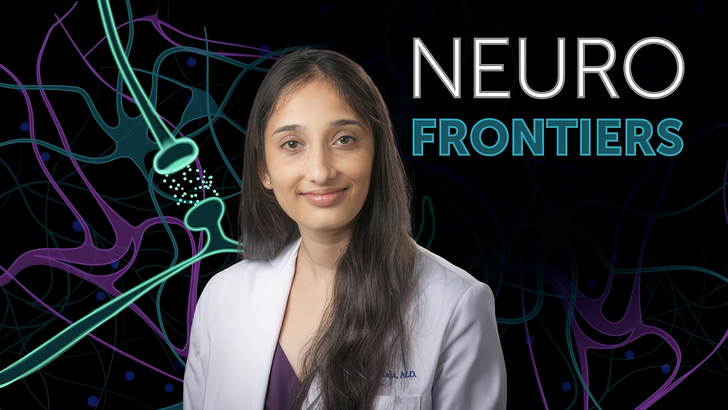
You’re listening to NeuroFrontiers on ReachMD. On this episode, we’ll hear from Dr. Shruti Raja, who’s an Associate Professor of Neurology at Duke Health in Durham, North Carolina. She’ll be discussing how myasthenia gravis treatment has changed over the past decade, a topic she spoke about at the 2026 AANEM Annual Meeting. Let’s dive into her insights now.
Dr. Raja:
There have been a lot of changes to MG therapies over the past 10 years, and that has really had an impact on how we treat MG patients. As a starting point, prior to 2010, the main therapies we had to treat myasthenia were surgical therapy—specifically thymectomy—acetylcholine esterase inhibitors, immunoglobulins, or plasma exchange. We have been using other therapies off-label for many, many years, including oral immunosuppressive agents, as well as plasma exchange and immunoglobulins.
However, not until 2015, when eculizumab was approved, did we really start getting into really targeted therapies. And so now we have, essentially, five classes of treatments to consider. We have our surgical treatments, which have been around for a long time. We have our steroids. We have our acetylcholine esterase inhibitors. And then the new ones on the block are these targeted therapies, specifically complement inhibition, anti-FcRN, and B-cell-depleting therapies, with the caveat that some B-cell therapies have been used off-label for decades now.
And so I think what really is important to consider with each of these therapies when you're approaching a newly diagnosed generalized MG patient is, what is the severity of the disease? What are the patient preferences regarding treatment? Because now, we have treatments that are oral. We have treatments that can be injectable. We have treatments that are infusion-based. And then, what is the timeline that we need in order to have therapies kick in? Because historically speaking, most of the oral immunomodulators take time. There's not a therapy that has an instant effect other than plasma exchange, and that is incredibly burdensome for patients as well as providers.
Announcer:
That was Dr. Shruti Raja talking about the evolving treatment landscape of myasthenia gravis. To access this and other episodes in our series, visit NeuroFrontiers on ReachMD.com, where you can Be Part of the Knowledge. Thanks for listening!